Krishna Dental Hospitals

How Orthodontics Improves Oral Health, Not Just Smiles

TRANSFORMING SMILES: IMPROVING HEALTH THROUGH ORTHODONTICS

"Orthodontic treatment for teeth alignment at Krishna Dental Hospitals, Hyderabad"
Orthodontic treatment does more than straighten teeth for appearance — misaligned teeth are harder to clean, which raises the risk of decay and gum disease, and can also contribute to abnormal wear, jaw strain, teeth grinding, and in some cases, airway restriction linked to sleep apnea. Braces, clear aligners, and other appliances correct these functional issues alongside the cosmetic ones. The right treatment for you depends on the severity of misalignment, your lifestyle, and budget — a consultation with X-rays or a digital scan is the only way to know which option fits your specific case.

Why Orthodontics Is About More Than a Straighter Smile

Most people think about orthodontics purely in cosmetic terms — straighter teeth, a more confident smile. That’s a real benefit, but it’s only part of the picture. Misaligned, crowded, or protruding teeth affect how well you can clean your mouth, how evenly your bite distributes pressure, and even how you breathe while sleeping. Correcting alignment addresses all of these at once, which is why orthodontists and general dentists both treat it as a functional intervention, not just a cosmetic one.

Here’s what that functional impact actually looks like, area by area.

Easier Chewing and Digestion

When teeth don’t meet evenly, chewing becomes less efficient — some teeth do more of the work than others, and food isn’t broken down as thoroughly before it’s swallowed. Since digestion starts in the mouth, a bite that doesn’t align properly can mean larger food particles reaching the stomach, making digestion marginally harder from the very first step. Correcting the bite through orthodontic treatment restores even chewing pressure across all the teeth, which is a functional benefit most people don’t associate with braces or aligners until it’s pointed out.

Straighter Teeth Are Easier to Clean — Lowering Decay and Gum Disease Risk

Crowded or overlapping teeth create tight spaces that a toothbrush and floss can’t fully reach, letting plaque accumulate in ways that are difficult to prevent no matter how diligent your brushing routine is. Over time, that trapped plaque raises the risk of both cavities and gum inflammation, since bacteria have more places to hide and less chance of being disturbed during normal brushing.

Straightening the teeth removes many of those hard-to-reach pockets, making day-to-day cleaning meaningfully more effective. This is one of the more direct ways orthodontic treatment reduces long-term risk of tooth decay and gum disease that might otherwise require laser gum therapy down the line.

Reduced Risk of Tooth Damage and Wear

Teeth that don’t meet evenly concentrate biting force unevenly too — some teeth absorb more pressure than they’re built for, which accelerates wear, chipping, and cracking over years of normal use. This uneven load is easy to miss day to day, since the damage accumulates gradually rather than happening all at once.

By spreading bite force evenly across all the teeth, orthodontic correction reduces this long-term wear. For teeth that have already sustained damage from years of uneven pressure, restorative options like a dental crown may still be needed alongside orthodontic treatment to fully repair the tooth.

Lower Risk of Mouth and Lip Injuries

Protruding or misaligned front teeth are more exposed and more likely to be chipped, cracked, or knocked during a fall, a sports collision, or even an accidental bite to the lip or cheek. Bringing protruding teeth back into alignment reduces how much they stick out, which lowers the odds of this kind of trauma happening in the first place — a benefit that matters most for children and active adults involved in contact sports.

Can Straightening Your Teeth Reduce Teeth Grinding?

Bite misalignment is one of several factors that can contribute to bruxism, the habit of grinding or clenching teeth, often during sleep. When teeth don’t meet properly, the jaw sometimes shifts or grinds in an attempt to find a more comfortable resting position, which can wear down enamel and strain jaw muscles over time. Correcting the underlying alignment doesn’t guarantee grinding will stop entirely — bruxism has other causes too, including stress — but for patients whose grinding is bite-related, orthodontic treatment can meaningfully reduce the habit’s severity.

Orthodontics and Jaw Joint (TMJ) Problems

The temporomandibular joints — the hinges connecting your jaw to your skull — depend on an even bite to function without strain. When teeth are misaligned, the jaw often compensates by shifting into positions that put uneven pressure on these joints, which can lead to clicking, pain, or stiffness over time. Realigning the bite through orthodontic treatment reduces this compensatory strain, which is why TMJ discomfort is one of the functional issues orthodontists screen for during an initial consultation, not just crowding or spacing.

The Surprising Link Between Orthodontics and Sleep Apnea

This is one of the least intuitive benefits of orthodontic treatment, but it’s a real one. When the jaw is narrow or positioned too far back, it can leave less room for the tongue, which increases the chance of the airway partially collapsing during sleep — a contributing factor in snoring and, in more significant cases, obstructive sleep apnea. Certain orthodontic approaches, including palatal expanders in children and specific jaw-repositioning appliances in adults, are used specifically to widen this space and improve airflow during sleep.

It’s worth being clear that orthodontic treatment isn’t a direct replacement for a sleep apnea diagnosis or treatment plan from a sleep specialist — but for patients whose airway restriction is related to jaw or bite structure, it can be a meaningful part of a broader treatment approach.

Is There an Ideal Age for Orthodontic Treatment?

Orthodontic treatment isn’t limited to any single age group, but timing does change what’s possible. In children, an orthodontic evaluation around age 7 lets an orthodontist catch jaw growth or spacing issues early — while there’s still room to guide how the jaw develops using appliances like palatal expanders, often avoiding more involved treatment later. Our pediatric dentistry team can help identify whether an early evaluation makes sense for your child.

For teenagers and adults, orthodontic treatment works by moving fully developed teeth into better positions rather than guiding jaw growth, which is why adult treatment tends to focus more heavily on alignment and bite correction rather than structural jaw changes. There’s no upper age limit for orthodontic treatment — healthy gums and bone are what matter, not age itself, which is why a growing share of orthodontic patients today are adults addressing alignment issues they’ve lived with for years.

Choosing the Right Orthodontic Treatment for You

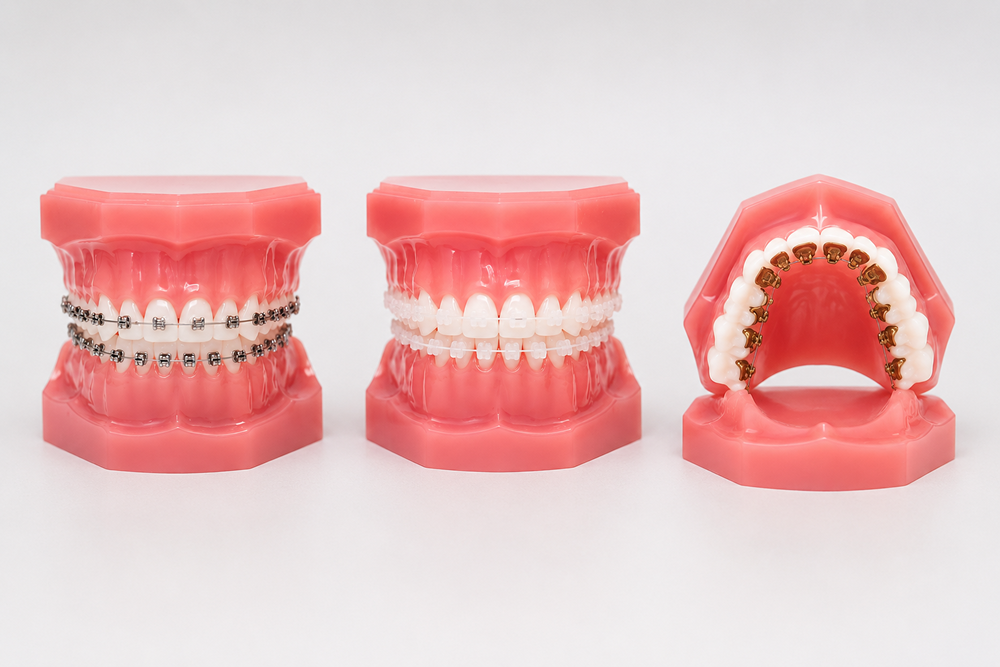
The right option depends on the severity of misalignment, your daily routine, and your budget — there isn’t a single “best” treatment that fits everyone. Broadly, the main categories are traditional metal or ceramic braces, which remain the most versatile option for complex cases, and clear aligners like Invisalign, which offer a more discreet, removable alternative for many mild-to-moderate cases.

Rather than guessing which fits your situation, the more useful first step is a consultation where an orthodontist examines your bite, takes X-rays or a digital scan, and lays out which options are actually suitable for your specific alignment. Our orthodontics page has more detail on the full range of treatment options available.

When Should You See an Orthodontist?

If you’re dealing with crowding, spacing, an uneven bite, jaw clicking or discomfort, or simply want to understand whether straightening your teeth could address a functional issue rather than just a cosmetic one, a consultation is the right starting point. Bring up any jaw pain, grinding, or breathing concerns you’ve noticed — these details help the orthodontist understand whether your case involves more than alignment alone.

At Krishna Dental Hospitals, our orthodontic team evaluates both the cosmetic and functional sides of your bite before recommending a treatment plan, so you’re addressing the underlying issue rather than just the appearance. Book a free consultation at one of our Hyderabad locations — Kondapur, Kukatpally, Kompally, A.S. Rao Nagar — and find out which option fits your case.

📞 Call: +91 88868 45454 💬 WhatsApp: wa.link/dznxyr 📅 Book: Free Consultation

About the Author

Dr. Naresh Krishna Reddy (BDS, MDS – Conservative Dentistry and Endodontics, MNR Dental College) leads the clinical team at Krishna Dental Hospitals, with a focus on preventive dentistry and patient education on diet’s role in oral health.

Medical Disclaimer

This article is for general informational purposes only and does not substitute professional dental or medical advice. Whether orthodontic treatment is right for you — and which type — should be determined by a qualified orthodontist based on an individual examination.

You may also want to read

best dental hospital in Hyderabad- krishna Dental Hospital

Say Hello to a Healthy Smile!

Enjoy a Free Consultation and Tailored Dental Advice from Our Specialists

Say Hello to a Healthy Smile!

Enjoy a Free Consultation and Tailored Dental Advice from Our Specialists

best dental hospital in Hyderabad- krishna Dental Hospital

Protruding or misaligned front teeth are more exposed and more likely to be chipped, cracked, or knocked during a fall, a sports collision, or even an accidental bite to the lip or cheek. Bringing protruding teeth back into alignment reduces how much they stick out, which lowers the odds of this kind of trauma happening in the first place — a benefit that matters most for children and active adults involved in contact sports.


Leave a Comment

Your email address will not be published. Required fields are marked *

Scroll to Top