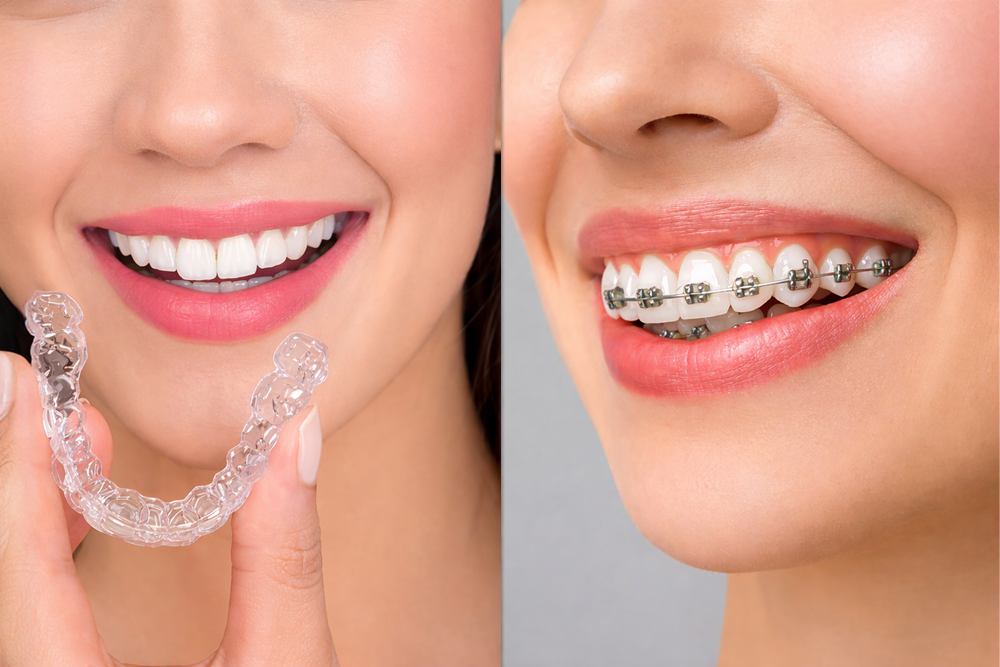
Traditional braces are fixed orthodontic appliances consisting of metal or ceramic brackets bonded to the teeth, connected by an archwire. Clear aligners, such as Invisalign, are removable, transparent plastic trays custom-molded to your teeth. While braces provide constant, high-pressure force for complex cases, aligners offer a discreet, flexible alternative for mild to moderate corrections.
For residents seeking world-class orthodontic care, Krishna Dental Hospitals stands as a premier destination, offering the latest digital scanning and AI-driven treatment planning. Whether you are searching for top-rated Dental Hospitals in Hyderabad or specifically looking for localized expertise near Dental Hospitals in Kondapur, understanding the mechanics of each option is the first step toward your transformation.
1. The Mechanics of Movement: How Do They Work?
How do traditional braces move teeth?
Braces work through a system of “tension and torque.” Brackets act as anchors, while the archwire applies continuous pressure. In 2026, many clinics have shifted to Self-Ligating Braces, which use a specialized clip instead of elastic bands, reducing friction and allowing for faster tooth movement with fewer adjustments.
How do clear aligners achieve results?
Aligners utilize a series of custom-made trays, each designed to move your teeth approximately 0.25mm. The magic lies in SmartForce Attachments—tiny, tooth-colored bumps placed on the teeth that give the plastic tray a “grip” to perform complex rotations that were previously only possible with metal wires.
2. Lifestyle Compatibility: Comfort and Aesthetics
Are aligners truly invisible?
Yes, for most social and professional interactions, clear aligners are virtually unnoticeable. This makes them the preferred choice for working professionals in corporate hubs like HITEC City. However, ceramic braces also offer a “clear” look by using translucent brackets that blend with your natural enamel.
Which option is more comfortable?
Aligners: Generally more comfortable as there are no metal edges to poke the cheeks or gums. You may feel “tightness” for the first 48 hours of a new tray.
Braces: Can cause initial irritation or “mouth sores.” However, modern 3D-printed brackets (like LightForce) are now contoured to fit the specific anatomy of each tooth, significantly reducing discomfort compared to the “one-size-fits-all” brackets of the past.
3. Maintenance and Oral Hygiene
Is it easier to clean your teeth with aligners?
Absolutely. Because aligners are removable, you can brush and floss normally. With braces, patients must use specialized tools like water flossers and interproximal brushes to navigate around the wires. Failure to maintain hygiene with braces can lead to “white spot lesions” (decalcification) around the brackets.
Are there food restrictions?
Braces: You must avoid hard, sticky, or crunchy foods (popcorn, nuts, hard candy) that could break a bracket.
Aligners: No food restrictions! You simply remove the trays to eat. However, you must brush your teeth before putting the trays back in to avoid trapping sugar and bacteria against your enamel.
4. Complexity and Treatment Time
Which is faster: Braces or Aligners?
In 2026, the gap is narrowing. On average, aligner treatments for mild crowding take 12 to 18 months, while complex braces cases take 18 to 24 months. However, a 2024 clinical study showed that for identical moderate cases, braces often finished 5 months sooner because they provide “forced compliance”—they work 24/7 without the patient needing to remember to wear them.
Can aligners fix a severe overbite?
While aligner technology has advanced, traditional braces remain the “Gold Standard” for severe structural issues, such as extreme overcrowding, large gaps, or significant jaw misalignment. Braces allow the orthodontist more granular control over the root movement of the tooth.
5. Cost and Technology Trends in 2026
Why are dental costs varying in Hyderabad?
The cost of treatment depends heavily on the technology used. Leading centers now use Intraoral Scanners (no more messy putty molds) and AI-Powered Progress Tracking, where you can send photos of your teeth via a mobile app for remote monitoring. This reduces the number of physical visits to the hospital, saving you time and travel.
Final Thought
Choosing between braces and aligners isn’t about finding the “better” tool, but the right one for your unique dental anatomy and discipline. If you value aesthetics and can commit to 22-hour daily wear, aligners are revolutionary. If your case is complex or you prefer a “set-it-and-forget-it” approach, traditional braces are your best bet. Always consult a specialist to map your path to a confident, healthy smile.
Frequently Asked Questions (FAQs)
1. Can I switch from braces to aligners mid-treatment?
Yes, “Hybrid Treatments” are common in 2026. Some patients start with braces to handle complex movements for 6 months and then switch to aligners for the finishing touches.
2. Do aligners affect my speech?
You may experience a slight lisp for the first few days as your tongue adjusts to the plastic. This typically disappears within 72 hours of consistent wear.
3. How often do I need to visit the dentist?
With braces, visits are usually every 4–6 weeks for wire tightening. With aligners and remote monitoring apps, you may only need a physical check-up every 10–12 weeks.
4. What happens if I lose an aligner tray?
Contact your clinic immediately. Usually, you will be advised to wear your previous tray or move to the next one, depending on how far along you were in that specific cycle.
5. Is orthodontic treatment painful for adults?
Modern techniques prioritize “low force, high efficiency.” While you will feel pressure as teeth shift, the sharp pain associated with older orthodontic methods has been largely eliminated through better material science.