
What Are Aligners? Everything You Need to Know Before Starting Treatment
Aligners are clear, removable plastic trays that gradually shift teeth into place through a series of custom-made stages, worn 20–22 hours a day and changed every 1–2 weeks. In Hyderabad, treatment typically costs ₹45,000–₹2,80,000 depending on case complexity and brand, and takes 6–24 months. They suit mild-to-moderate misalignment — crowding, gaps, and bite issues — and are best for patients who can commit to the wear schedule; severe skeletal cases may still need braces.
What Are Aligners?
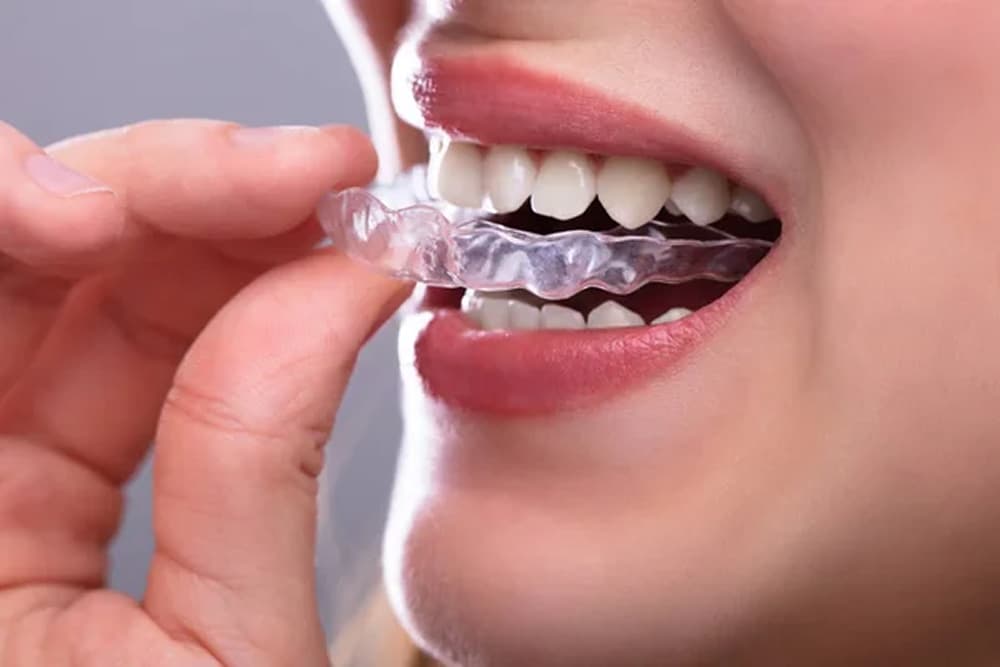
Aligners are clear, removable orthodontic trays made from medical-grade transparent plastic. They are custom-designed to fit snugly over your teeth and apply gentle, controlled pressure to gradually shift them into the correct position.
Unlike traditional metal braces that use wires and brackets fixed onto the teeth, aligners are nearly invisible and can be taken off while eating, brushing, or on special occasions. Each tray in the series is slightly different from the previous one — designed to move your teeth one small step at a time toward the final position planned by your dentist or orthodontist.
In simple terms: aligners are like a personalised roadmap for your smile, guiding each tooth to exactly where it needs to be.
How Do Aligners Work?
Aligners work on a principle called incremental tooth movement. Here is the step-by-step process:
Step 1 — Consultation and Digital Scanning Your orthodontist takes 3D digital scans or impressions of your teeth. These scans create a precise map of your current dental structure.
Step 2 — Custom Treatment Planning Using advanced software, a digital treatment plan is created. You can often see a virtual simulation of how your teeth will move at each stage and what your smile will look like at the end.
Step 3 — Aligner Fabrication Your custom set of aligners is manufactured — typically ranging from 10 to 30 or more trays depending on the complexity of your case.
Step 4 — Wearing the Aligners You wear each tray for 1 to 2 weeks for a minimum of 20 to 22 hours per day. The aligner applies steady pressure on specific teeth, encouraging them to shift gradually.
Step 5 — Progressing Through the Series Once your teeth have moved to match the current tray’s shape, you switch to the next one in the series. Each new tray picks up from where the previous one left off.
Step 6 — Retention Phase After completing all the trays, your dentist will prescribe a retainer to hold your teeth in their new positions and prevent them from shifting back.
The average treatment duration is approximately 12 to 18 months, though simple cases can be completed in as few as 6 months.
Types of Aligners Available
What Dental Issues Can Aligners Treat?
Aligners are effective for a wide range of common dental misalignments:
- Crowded teeth — When teeth overlap due to insufficient space in the jaw
- Spacing gaps — Unwanted gaps or spaces between teeth
- Overbite — Upper front teeth overlap too far over the lower teeth
- Underbite — Lower teeth sit in front of upper teeth
- Crossbite — Upper and lower teeth do not align side to side
- Open bite — Upper and lower teeth do not meet when the mouth is closed
- Mild to moderate malocclusion — General misalignment of the bite
Severe orthodontic cases may still require traditional braces or a combination of braces and aligners, which your orthodontist will assess during the initial consultation.
Key Benefits of Aligners
Nearly Invisible The clear plastic material makes aligners almost undetectable when worn. Most people will not notice you are undergoing orthodontic treatment — a major confidence boost for adults.
Removable You can take them off while eating, drinking (anything other than water), brushing, and flossing. This means no food restrictions and no complicated cleaning around wires.
Comfortable to Wear Aligners have smooth edges and no sharp metal components. There is minimal risk of mouth sores or irritation that are commonly associated with traditional braces.
Predictable Results Because treatment is digitally planned from the start, both you and your dentist can track progress clearly. Many patients can even preview their final smile before treatment begins.
Better Oral Hygiene Since aligners are removable, maintaining oral hygiene is straightforward. You brush and floss normally without navigating around brackets and wires — reducing the risk of cavities and gum disease during treatment.
Fewer Emergency Visits No wires to break, no brackets to pop off. Aligner-related emergencies are rare compared to traditional braces.
Who Is a Good Candidate for Aligners?
Aligners are suitable for:
- Adults and teenagers with mild to moderate dental misalignment
- People with a complete set of permanent teeth
- Individuals who can commit to wearing trays for 20 to 22 hours daily
- Patients looking for a discreet, lifestyle-friendly orthodontic option
Aligners may not be recommended for:
- Young children whose teeth are still developing
- Patients with severe skeletal jaw misalignment requiring surgery
- Individuals with significant tooth rotation or vertical movement needs (in some complex cases)
- People unlikely to comply with the wearing schedule — since aligners only work when they are in your mouth
What to Expect During Aligner Treatment
Mild Discomfort at the Start of Each New Tray When you switch to a new tray, your teeth may feel slightly sore or tender for the first 2 to 3 days. This is completely normal and is actually a sign the aligners are working. The discomfort fades quickly as your teeth adjust.
Speech Adjustment Some patients notice a slight lisp when they first start wearing aligners. This typically resolves within a few days as your tongue adjusts to the trays.
Staining Awareness Although aligners are clear, they can stain if you drink coffee, tea, or coloured beverages while wearing them. Always remove your aligners before consuming anything other than plain water.
Regular Check-ins Even though you are managing trays at home, you will still visit your dentist or orthodontist periodically — typically every 6 to 8 weeks — to monitor progress and receive the next set of trays.
Post-Treatment Retainer Once your treatment is complete, wearing a retainer is non-negotiable. Teeth have a natural tendency to shift back toward their original position. A retainer keeps your results intact for the long term.
Aligners vs Traditional Braces — A Quick Comparison
Feature | Aligners | Traditional Braces |
Visibility | Nearly invisible | Clearly visible |
Removability | Yes | No (fixed) |
Eating restrictions | None | Several |
Oral hygiene ease | Easy | Requires extra effort |
Comfort level | High | Moderate (wires can irritate) |
Treatment complexity | Mild to moderate | Mild to severe |
Treatment duration | 6 – 24 months | 18 – 36 months |
Cost range | Moderate to high | Moderate |
Compliance required | High (patient-dependent) | Fixed (always working) |
What Does Aligner Treatment Cost in Hyderabad?
Aligners cost in Hyderabad varies considerably based on three factors: the complexity of your case, the brand of aligners used, and the experience level of the treating clinic.
Treatment Type | Estimated Cost Range |
Minor corrections (10–15 trays) | ₹45,000 – ₹80,000 |
Moderate cases (16–30 trays) | ₹80,000 – ₹1,50,000 |
Complex full-arch treatment | ₹1,50,000 – ₹2,50,000 |
Premium international brands | ₹1,80,000 – ₹2,80,000 |
These figures reflect typical Hyderabad pricing and include consultation, tray fabrication, and follow-up visits in most cases. Always confirm what’s included before signing a treatment plan.
Clinics like krishnadentalhospitals offer transparent pricing and initial consultations that help patients understand their specific cost tier before committing to treatment.
Wrapping Up: Making the Right Choice in Hyderabad
Clear aligners represent one of the most significant shifts in orthodontic care in recent decades — not because they’re flashy, but because they removed the biggest psychological barrier people had to actually starting treatment. The technology is mature, the results are proven, and access in Hyderabad has never been better.
The decision, though, still comes down to finding a provider you trust. Research your options, ask the hard questions, and look for clinics with transparent pricing and verifiable experience.
Ready to take the next step? Book a consultation at krishnadentalhospitals.com and get a personalized assessment of your case, your timeline, and your actual treatment cost — no guesswork, no vague estimates.
Dental Aligners FAQ’s
How much do aligners cost in Hyderabad?
Aligner treatment in Hyderabad typically ranges from ₹45,000 for minor corrections to ₹2,80,000 for complex full-arch cases with premium international brands. The exact cost depends on how many trays your case needs, the brand used, and the clinic’s experience level.
How long does aligner treatment take?
Most aligner treatments take 6 to 18 months, though simple cases can finish in as little as 6 months and complex cases may take up to 24 months. Your orthodontist can give you a specific timeline after reviewing your digital scan.
Do aligners hurt more than braces?
Aligners typically cause less discomfort than braces. You may feel mild soreness for 2–3 days each time you switch to a new tray, but this is a sign the aligners are working and fades quickly — there are no wires or brackets to cause the sores common with traditional braces.
Can aligners fix an overbite or crossbite, or just crooked teeth?
Aligners can treat a range of issues beyond crowding, including overbites, underbites, crossbites, open bites, and spacing gaps, provided the case is mild to moderate. Severe skeletal misalignment may still require traditional braces or surgical evaluation.
What happens if I don’t wear my aligners for the full 20–22 hours a day?
Aligners only move teeth while they’re in your mouth, so inconsistent wear slows progress and can extend your treatment timeline or affect the final result. Unlike fixed braces, which work continuously regardless of compliance, aligners depend entirely on the patient following the prescribed schedule.
Author Bio
Dr. Naresh Krishna Reddy, BDS, MDS (Conservative Dentistry & Endodontics)
Dr. Naresh Krishna Reddy is the founder of Krishna Dental Hospitals and a practicing endodontist in Hyderabad. He holds a BDS and an MDS in Conservative Dentistry & Endodontics from MNR Dental College & Hospital, Sangareddy, and is a member of the Indian Dental Association and the Indian Endodontic Society. He has personally performed over 1,500 root canal treatments and has a special interest in minimally invasive endodontics and smile design.